
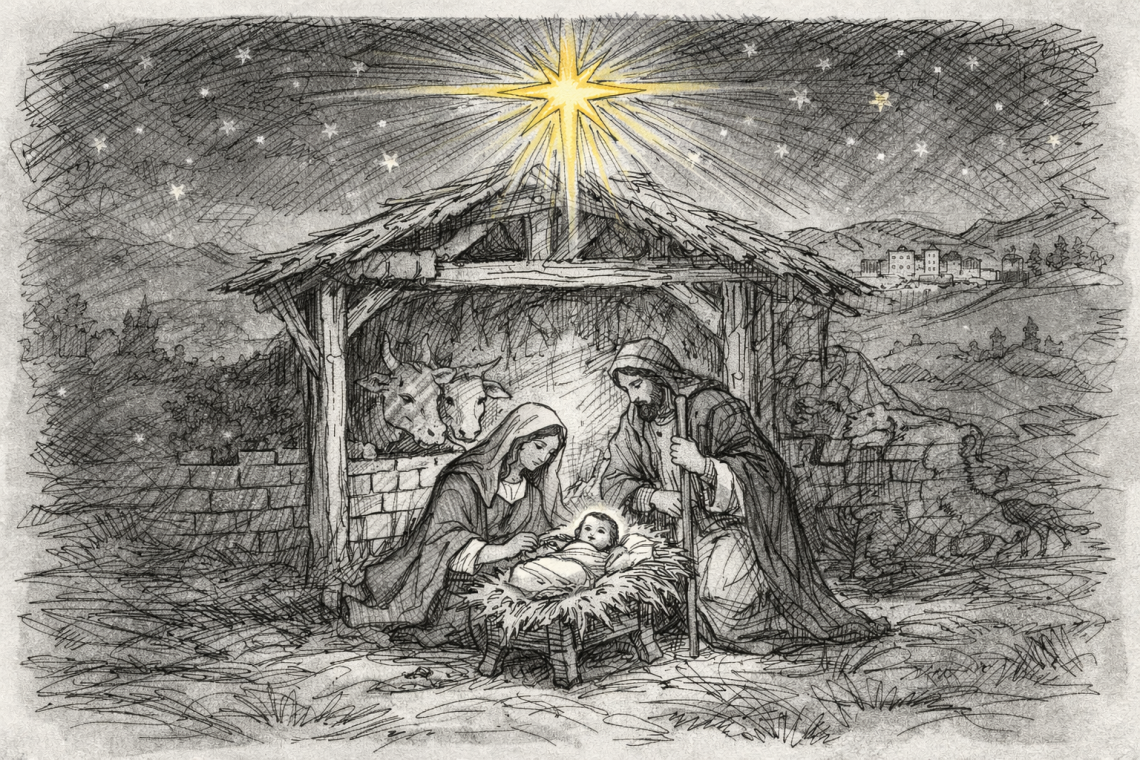
The True Magic of Christmas, Christ Born for Man
Every year, Christmas arrives wrapped in lights and music, memories and expectations. We decorate our homes, gather with family and friends, exchange gifts, and pause our routines for something that feels both familiar and sacred. Yet beneath the glow of twinkling trees and the comfort of tradition lies a deeper magic, one that does not fade when the decorations come down. The true magic of Christmas is not found in what we give or receive, but in Who was given, Christ, born for mankind.
Christmas is the story of God stepping into human history, not as a distant ruler, but as a vulnerable child. It is the moment eternity touched time, when heaven bent low and love took on flesh. This is not a sentimental tale meant only to inspire warm feelings once a year. It is the foundation of hope itself, a declaration that God did not abandon humanity to darkness, but entered it to bring light.
A Promise Fulfilled
Long before the manger, Christmas was a promise. Throughout the Old Testament, God spoke through prophets, hinting at a coming Savior, one who would restore what had been broken. Isaiah foretold, “For unto us a child is born, unto us a son is given… and His name shall be called Wonderful Counselor, Mighty God, Everlasting Father, Prince of Peace” (Isaiah 9:6). These words were written centuries before Jesus took His first breath, yet they carried the weight of hope for generations.
The world Jesus entered was weary and waiting. People longed for deliverance, though many expected power and political rescue. What they received instead was a baby wrapped in swaddling cloths, laid in a feeding trough. God’s answer to humanity’s brokenness came not with force, but with humility.
This is part of the wonder of Christmas. God fulfilled His promise in a way no one anticipated. Salvation arrived quietly, in the stillness of a Bethlehem night, reminding us that God often works most profoundly in places the world overlooks.
God With Us
One of the most powerful truths of Christmas is found in the name given to Jesus, Immanuel, meaning “God with us” (Matthew 1:23). These words carry extraordinary weight. God did not remain distant from human pain, fear, or sorrow. He chose to dwell among us.
In Jesus, God experienced hunger, fatigue, joy, grief, and temptation. He knew what it was to be misunderstood, rejected, and betrayed. From the moment of His birth, Christ entered fully into the human story. This is the miracle of the incarnation, that the Creator of all things chose to become part of His creation.
Christmas reminds us that we are not alone. When life feels heavy, when suffering seems unbearable, the birth of Christ declares that God understands. He has walked our roads and shared our tears. The manger stands as a quiet testimony that no human experience is beneath God’s notice.
The Humility of the Manger
It is impossible to separate the meaning of Christmas from the humility surrounding Jesus’ birth. There was no palace, no royal announcement, no earthly splendor. Instead, angels appeared to shepherds, ordinary laborers often considered insignificant by society. The Savior of the world was announced first to those on the outskirts of the city.
Luke records the angel’s words, “Fear not, for behold, I bring you good tidings of great joy, which shall be to all people” (Luke 2:10). All people. Not the powerful alone, not the righteous elite, but everyone.
The manger teaches us that God’s kingdom operates differently than the world’s systems. Worth is not measured by status, wealth, or recognition. Christ came low so that no one would be too low to reach Him. Christmas whispers hope to the overlooked, the weary, and the brokenhearted.
Love Made Visible
At its core, Christmas is a story of love. Not abstract love, but love made visible and tangible. “For God so loved the world that He gave His only begotten Son” (John 3:16). The gift of Jesus was not an afterthought, it was the ultimate expression of God’s heart toward humanity.
The baby in the manger was born with a purpose that extended far beyond Bethlehem. From the very beginning, the shadow of the cross stood behind the cradle. Christ came not only to live among us, but to die for us. Christmas and Easter are inseparably linked, the birth of a Savior who would ultimately give His life so that we might be restored to God.
This is where the magic of Christmas deepens. It is not sentimental or shallow. It is sacrificial. It is love that costs something. The gift of Christ tells us that we are worth pursuing, worth redeeming, worth loving completely.
Light in the Darkness
The world Jesus entered was marked by darkness, political oppression, spiritual confusion, and deep longing. It is not so different from the world we know today. Yet Scripture declares, “The light shines in the darkness, and the darkness has not overcome it” (John 1:5).
Christmas proclaims that darkness does not have the final word. The birth of Christ was the arrival of light that no amount of sin, fear, or suffering could extinguish. This light continues to shine, offering hope in seasons of grief, uncertainty, and despair.
For many, Christmas can be painful. It can highlight loss, loneliness, or unmet expectations. Yet the presence of Christ does not dismiss pain, it enters it. The light of Christmas does not erase hardship, but it promises that darkness will not last forever.
A Savior for Every Heart
The angels proclaimed peace on earth, goodwill toward men (Luke 2:14), but this peace was not merely the absence of conflict. It was reconciliation, between God and humanity, between broken hearts and their Creator.
Jesus came for sinners, not the perfect. He came for those who knew they needed saving, and for those who did not yet realize it. Christmas invites every heart to make room for Him, not by achieving worthiness, but by receiving grace.
The simplicity of the nativity reminds us that salvation is not earned through effort, but received through faith. Just as Mary received the promise with humble obedience, and the shepherds responded with awe and worship, we are invited to come as we are.
Living the Message of Christmas
The magic of Christmas does not end on December 25. It is meant to shape how we live every day. If Christ came in humility, we are called to humility. If He came in love, we are called to love. If He entered our brokenness, we are called to extend compassion to others.
Christmas challenges us to carry Christ into the world, to reflect His light in our words, actions, and relationships. The miracle of the incarnation continues whenever love triumphs over fear, generosity over greed, and hope over despair.
In a world that often equates Christmas with consumption, the gospel invites us to remember that the greatest gift cannot be bought, wrapped, or earned. It was given freely, quietly, and lovingly, in the form of a child born for man.
The Greatest Gift
The magic of Christmas is not fleeting. It is eternal. It is the story of a God who loved humanity enough to step into time, to dwell among us, and to redeem us. This is the miracle worth celebrating, not just once a year, but every day.
As we celebrate Christmas this year, may we look beyond the surface and remember what truly matters.
“Thanks be to God for His indescribable gift” (2 Corinthians 9:15).

Rae Bargo
Rae Bargo is a writer, encourager, and believer who weaves faith, creativity, and purpose together in her work. Originally from Kentucky, where storytelling is a way of life, Rae believes stories truly matter and that God often works most beautifully through ordinary lives and everyday moments.